
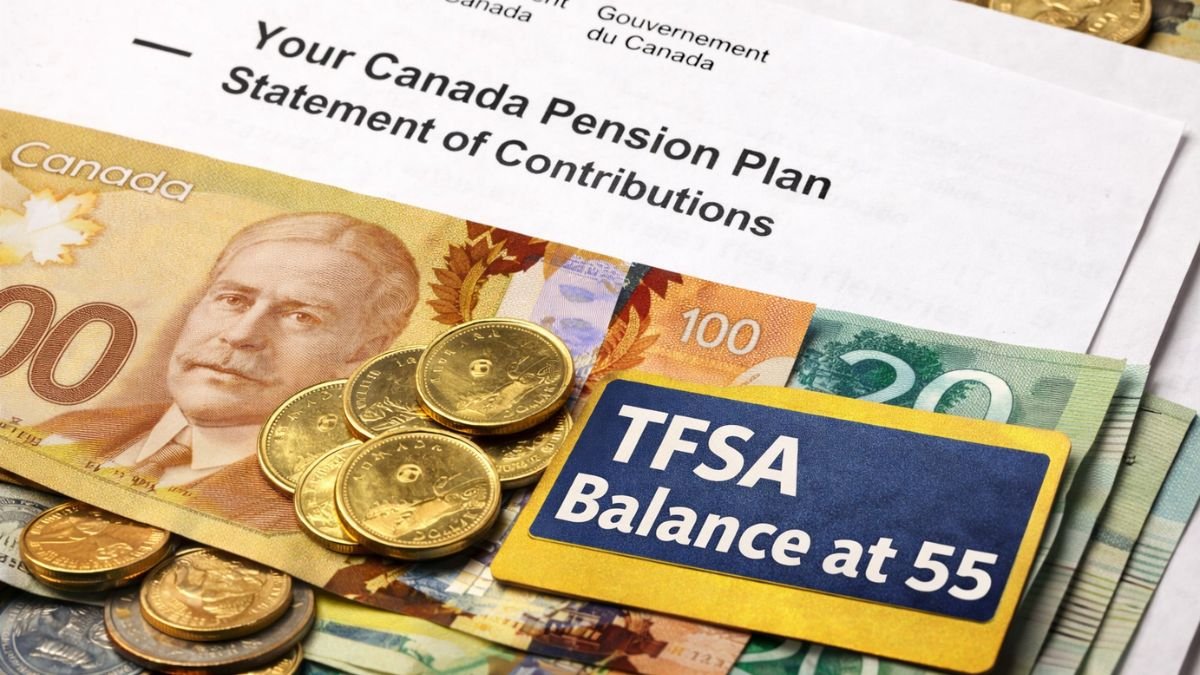
Turning 55 is a critical milestone in financial planning for Canadians. At this stage, your savings, investments, and retirement strategy begin to take shape in a more defined way.
One of the most important tools available is the Tax-Free Savings Account (TFSA), which can play a major role in funding early retirement and maximizing long-term wealth. However, recent data shows that many Canadians may not be using their TFSA to its full potential.
Average TFSA Balance for Canadians Aged 55–60
According to recent data from Statistics Canada, Canadians aged between 55 and 60 had an average TFSA balance of approximately $37,600 in 2023.
While this figure provides a general benchmark, it may not accurately reflect financial readiness. The data shows:
- Total contributions: $9.9 billion
- Total withdrawals: $4.9 billion
- Average contribution: $12,302
- Average withdrawal: $12,350
This gap between total and average values highlights a wide variation in how Canadians use their TFSAs, meaning the “average” may not be the best indicator of financial health.
Why Age 55 Is a Financial Turning Point
At 55, your financial decisions become more impactful, especially regarding retirement planning. The Canada Pension Plan (CPP) calculates benefits based on your best 39 earning years between ages 18 and 65.
If you are no longer earning income at 55, it may be worth considering starting CPP benefits at age 60. However, having a strong TFSA balance can provide flexibility, allowing you to delay CPP and potentially receive higher monthly payments later.
Are You Underusing Your TFSA?
If your TFSA balance is around $37,600, it likely means you haven’t fully utilized your available contribution room.
Key facts:
- Total TFSA contribution room reached $109,000 by 2026
- Earlier contribution room was $88,000 before recent increases
- Consistent contributions can significantly boost long-term returns
For example, investing the full contribution amount with a modest 6% annual return could generate around $6,540 per year tax-free.
How to Grow Your TFSA Before Retirement
Even at 55, you still have about 10 years before retirement, which is enough time to build a strong investment portfolio.
Here’s an example of consistent contributions with a 6% return:
| Year | Contribution | Estimated Balance | 6% Return |
|---|---|---|---|
| 2022 | $6,000 | $6,000 | $360 |
| 2023 | $6,500 | $12,860 | $771 |
| 2024 | $7,000 | $19,860 | $1,191 |
| 2025 | $7,000 | $26,860 | $1,611 |
| 2026 | $7,000 | $33,860 | $2,031 |
This shows how disciplined investing can steadily grow your TFSA balance over time.
Using Dividend Stocks to Boost TFSA Income
At age 55, many investors prefer stability over high-risk investments. Dividend-paying stocks can provide a reliable income stream while preserving capital.
One example is SmartCentres REIT, a well-known real estate investment trust in Canada.
Why Consider SmartCentres REIT?
- Strong relationship with major tenants like Walmart
- Consistent dividend history spanning over 20 years
- Diversification into residential, commercial, and industrial developments
- High dividend yield of around 6.89%
Compared to traditional savings options like Guaranteed Investment Certificates (GICs) offering around 3.6%–3.85%, dividend stocks can provide significantly higher returns.
Benefits of TFSA for Retirement Planning
The TFSA offers several advantages that make it a powerful retirement tool:
- Tax-free withdrawals
- No impact on CPP or Old Age Security (OAS) benefits
- Flexibility to withdraw funds anytime
- Ability to reinvest and grow savings tax-free
These benefits make the TFSA ideal for building a stable and flexible retirement income.